
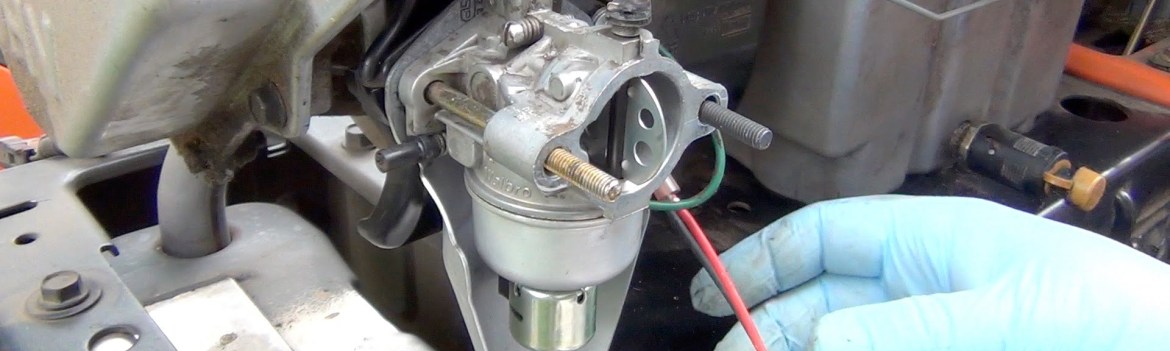
Biggest Factors in Engine Problems Are Fuel Related
One of the most frustrating things as an equipment owner is when you go to start your lawn mower, trimmer, pressure washer or any other piece of equipment and you get nothing. You pull and pull on the starter cord and can’t get the engine to turn over, or at the most it will run for about 20 seconds and then dies.
Raise your hand if this has happened to you.
No surprises to us, but the majority of you have your hand in the air. In most cases when you run across this problem it is due to a fuel related issue. It could be old stale fuel, or maybe contamination from trash, debris or water in your fuel. Either way, you get the same result of frustration and possibly a broken or bruised foot from when you just kicked your machine.
So what is the shelf life of gasoline?
This is a very good question; there are many different opinions on shelf life and many factors that affect the life of gasoline. With the properties of gasoline and the inclusion of ethanol in some fuels it is said the shelf life has decreased. The fact of the matter is, and you probably don’t want to hear this, but the fuel can in your garage might only hold its properties for a month or so.
What makes gasoline go bad or stale?
1) The lighter chemicals in gasoline evaporate, which leaves a heavier, less potent fuel behind. Basically, gasoline vaporizes readily so if unused, its more volatile components waft away.
2) Oxidation can occur, which is when some of the hydrocarbons in the fuel react with oxygen to produce new compounds and this is not good for gasoline. When oxidation is starting to affect your fuel, it can be detected because it will give off a sour odor, the fuel will have turned darker and you might find small solid particles of gum.
3) Then there is contamination of fuel. This happens if any dirt, debris or the main culprit water gets into the equipment fuel tank or your gas can. Water usually gets into stored gas from condensation as temperatures fluctuate.
These issues are the main cause of your frustration when you can’t get your engine to turn over. Any and all of these fuel problems can cause filters to clog, blocked carburetor injectors, gum up fuel lines, gum up carburetor or foul your plugs and engine. Obviously none of these outcomes are good and will require you to get your equipment serviced. The service usually will include; flush and clean fuel tank and fuel system, clean carburetor and injectors, and possibly replacement of filters and plugs. All this results in a little dent in your pocket-book to go along with the frustration and foot problems you now have.
As a dealer and repair shop fuel related problems are one of the most difficult things to explain to a customer, and probably the number one reason for dissatisfaction in a customer. Telling a customer they have to pay for the service, especially if the unit is still under warranty, usually isn’t a smooth process. But we, Aztec Rental understand your concerns and questions and try to educate and explain until the customer has an understanding of the issue and feel comfortable with our findings. Trust me, Aztec Rental and most dealers are not out to get you.
Here are some images of bad fuel use in engines from are freinds over at STIHL.
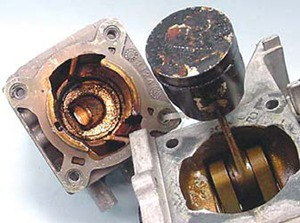
This trimmer engine was damaged due to the use of old, stale fuel mix. As the fuel ages, the lighter molecules combust differently and will interact differently with the mix oil. In this case the combustion of the fuel deposited a heavy layer of carbon and fuel residue throughout the combustion chamber.
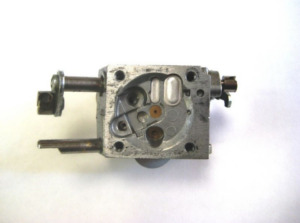
Here's another example of the residue left in the carburetor metering chamber due to the use of old, stale fuel. Again the inlet needle is stuck and the main nozzle is partially blocked. There is less than a 50/50 chance the carburetor can be cleaned and returned to serviceable condition. Most technicians would consider replacing the carburetor as the more reliable repair.
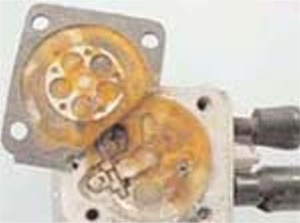
This is an example of the damage that occurs when water is present in the fuel. This carburetor cannot be repaired and would require replacement.
For more information on the subject from STIHL click here.
Tips on keeping your fuel fresh
- Store fuel in clean containers with tight caps
- Keep container nearly full to reduce exposure to air, allow room for gas to expand and contract as the temperature changes
- Store in cool place to reduce evaporation and oxidation
- Use a fuel stabilizer
We hope this helps ease your frustration a little, and you better get that foot looked at.
Contact Us